

What Is Beef Tallow? A Men's Grooming Guide
If you are asking what is beef tallow, the short answer is straightforward: it is purified, rendered fat from cattle. The longer answer explains why the ingredient has a place in a modern men's grooming formula. Its texture, fatty-acid profile, sourcing, and processing all affect how it performs in a balm or other topical product. This guide covers the ingredient from raw fat to finished grooming formula, without confusing an ingredient overview with a medical claim.
Shop DALYSMOOTH's tallow-powered beard and skin balms
What is beef tallow, exactly?
Beef tallow is a stable, semi-solid fat made by rendering and filtering bovine adipose tissue. In other words, heat separates usable fat from water, proteins, and connective tissue, then filtration produces a clean ingredient that solidifies as it cools. Tallow is not the same as lard, butter, or a plant oil. Its final texture and performance depend on the cattle source, the part of the animal used, the rendering method, and the finished formula.
In a grooming context, tallow is a lipid-rich base. It can give a balm body, glide, and a conditioned finish while helping the formula carry other oil-soluble ingredients. That does not mean every tallow product is identical. A jar made from carefully filtered cosmetic-grade tallow is a different proposition from unrefined cooking drippings, and the ingredient list still matters.
Is beef tallow the same as lard?
No. Beef tallow comes from cattle, while lard comes from pigs. Both are rendered animal fats, but they have different fatty-acid profiles, textures, and culinary or cosmetic uses. Butter is also different because it is an emulsion containing milk solids and water, not a purified rendered fat. Plant oils, such as jojoba or sunflower oil, come from seeds or fruit and remain liquid or semi-liquid according to their own lipid composition.
| Ingredient | Source | Typical grooming role |
|---|---|---|
| Beef tallow | Rendered cattle fat | Rich conditioning base |
| Lard | Rendered pork fat | Different animal-fat base |
| Jojoba oil | Seed-derived liquid wax | Slip and lighter feel |
The useful distinction is not that one category is automatically better than all others. It is that each lipid brings a different structure and sensory profile. A thoughtful men's grooming formula uses those characteristics for a specific job.
How is beef tallow made?
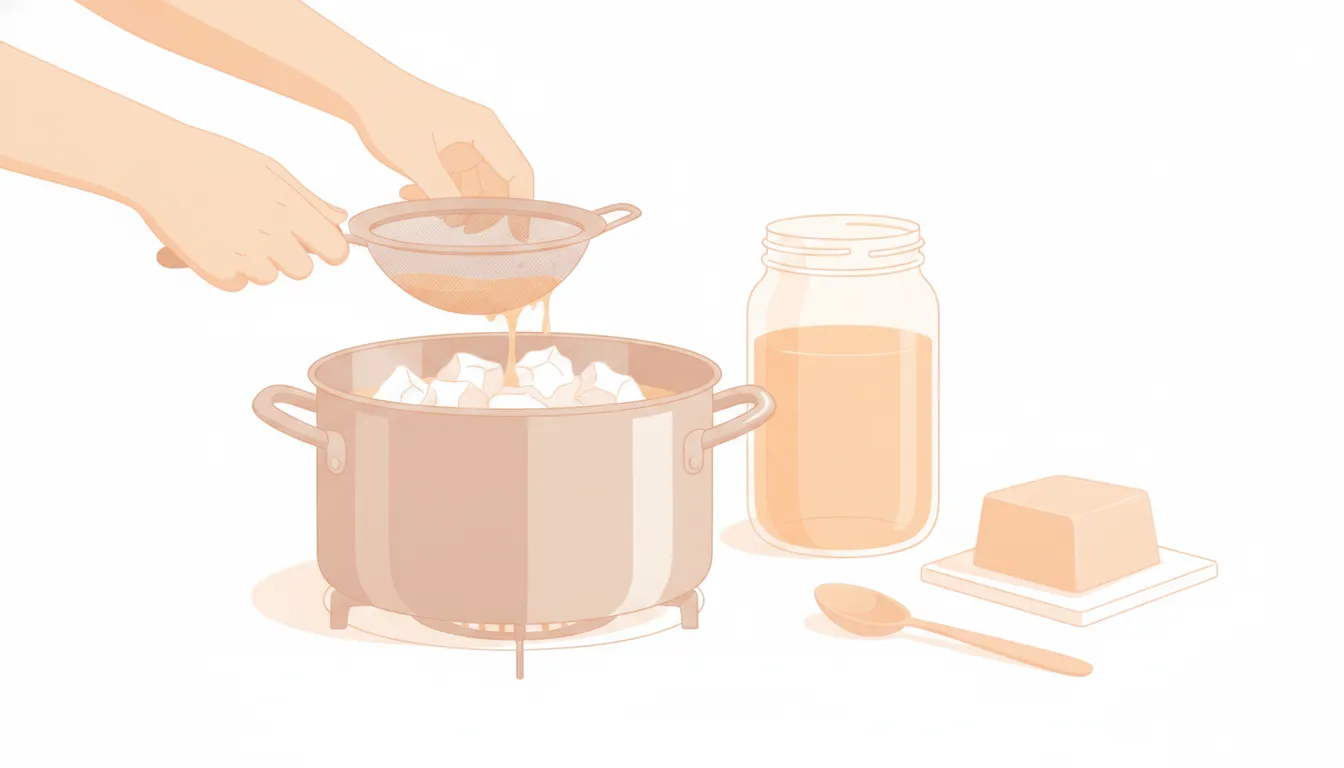
Beef tallow is made by separating fat from fresh bovine tissue, gently rendering it until the fat liquefies, removing water and solids, filtering the liquid, and cooling it into a stable semi-solid. Commercial processing can include additional purification or deodorization steps. The goal is a clean, consistent ingredient with a predictable texture and no unwanted tissue residue.
The process begins with adipose tissue. Suet traditionally refers to the firm fat around the kidneys and loins, although producers may work with other suitable beef fat. The raw material is trimmed, sorted, and heated. In dry rendering, the fat is heated without added water. In wet rendering, water may be present during heating and is separated later. Temperature, time, filtration, and storage conditions all influence color, aroma, and consistency.
What happens during rendering?
- Separation: Heat melts the fat while proteins, connective tissue, and other solids separate from the liquid lipid.
- Clarification: The liquid is strained or filtered to remove remaining particles and moisture.
- Cooling: As the purified fat cools, it returns to a creamy or solid texture.
- Formulation: Cosmetic producers may blend tallow with oils, waxes, fragrance, or other ingredients to control feel and performance.
Rendering is not a single universal recipe. A product maker should be able to explain the source and general processing standard without pretending that every batch has exactly the same color or firmness. DALYSMOOTH's broader brand story connects American craftsmanship with beef tallow-based grooming, and its products acknowledge that naturally derived ingredients can vary slightly from batch to batch.
What is beef tallow made of at the chemical level?
At the chemical level, beef tallow is made mostly of triglycerides, which are molecules built from glycerol attached to three fatty acids. Its fatty-acid mix commonly includes saturated fats such as palmitic and stearic acid, along with monounsaturated oleic acid. The exact balance varies with cattle, tissue, diet, processing, and storage. That variability is one reason a finished formula matters as much as the headline ingredient.
Triglycerides are the main storage form of fat in animal tissue. When they are melted and separated from non-fat material, they create the rich, cushiony base people recognize as tallow. The balance between more saturated and more unsaturated fatty acids influences melting behavior, firmness, spreadability, and how the product feels on skin and hair.
Tallow also contains naturally occurring fat-soluble nutrients, including vitamins A, D, E, and K, although the level is not a guaranteed fixed number in every source or finished product. Processing and storage can affect nutrient retention. For that reason, responsible grooming copy should describe tallow as naturally nutrient-rich without promising a measured vitamin dose or a therapeutic result.
This chemistry is practical, not just academic. In a balm, a firmer lipid can contribute structure and staying power. A complementary liquid oil can improve spread and reduce drag. Beeswax can add shape and light hold. Those choices turn a raw material into a product that is easier to apply through facial hair and across the skin beneath it.
See how DALYSMOOTH First Tee uses tallow in a practical face and beard balm
Why does beef tallow work in men's grooming formulas?
Beef tallow works in a men's grooming formula because it supplies a rich, skin-compatible lipid base that can soften the feel of facial hair and reduce the dry, tight feel associated with a depleted surface barrier. Its value is mainly structural and conditioning: it gives the formula substance, helps distribute oil-soluble ingredients, and leaves a protective, conditioned finish. The complete ingredient system determines the final result.
Facial hair does not produce its own oil, and the skin underneath can be easy to overlook. A balm built around tallow can address both surfaces in one step: the hair receives conditioning and the skin receives a lipid-rich layer. This is a grooming benefit, not a claim that tallow changes hair biology or treats a skin disease.
Skin compatibility also needs a precise explanation. Tallow shares some broad lipid characteristics with the oils found on the skin surface, which helps explain why it can function as an emollient. It is not chemically identical to human sebum, and it is not automatically right for every person. Fragrance, waxes, botanical oils, and other ingredients can affect how a finished product feels. Anyone with a history of sensitivity should review the full ingredient list and patch test first.
That balanced view is supported by the current evidence. A 2024 scoping review of tallow and skin compatibility found that research on topical human use remains limited and called for better controlled studies. The takeaway is not that tallow has no place in grooming. It is that cosmetic benefits such as conditioning, softness, and moisture support should not be inflated into medical promises.
How should you evaluate the source of beef tallow?
Evaluate beef tallow by looking at its animal source, rendering and filtration practices, ingredient transparency, storage guidance, and the reputation of the maker. Grass-fed or pasture-based sourcing can matter to a brand's provenance, but the label alone does not describe the entire finished formula. Look for clear answers about what the tallow is, how it is processed, what else is in the product, and how natural variation is handled.
- Source: Does the maker identify the country or region and explain its supply chain?
- Processing: Is the tallow rendered and filtered for a consistent cosmetic texture?
- Formula: Are all oils, waxes, fragrance components, and preservatives disclosed?
- Purpose: Does the product explain whether it is a balm, wash, moisturizer, or another format?
- Storage: Are there practical instructions for protecting the product from heat, moisture, and direct sun?
- Claims: Does the brand stay with grooming outcomes instead of promising to cure or prevent disease?
For DALYSMOOTH, the sourcing story is part of the product's identity. The brand is USA-made, tied to Colorado cattle-ranching expertise, and built around straightforward grooming rather than an elaborate multi-step routine. That provenance gives readers useful context, but it does not remove the need to read the specific product label.
Is beef tallow a good ingredient for a beard and skin balm?
Beef tallow can be a useful ingredient in a beard and skin balm when it is properly rendered, clearly labeled, and balanced with the rest of the formula. It can contribute softness, glide, and a conditioned finish for facial hair and the skin beneath it. The best choice depends on personal preference, scent tolerance, skin response, and whether the product delivers the texture and control you actually want.
A good balm should earn its place by making the routine simpler. It should spread without excessive tugging, leave the beard more manageable, and avoid a greasy finish that makes the product impractical. Tallow can help create that rich base, while lighter oils and waxes tune the feel. The result is a formula, not a single-ingredient competition.
If you want a broader look at topical use, read DALYSMOOTH's beef tallow for skin guide. That page covers benefits, risks, and use. This article stays focused on what the ingredient is and how it becomes a grooming material. Keeping those jobs separate makes the information easier to trust and prevents one page from trying to answer every tallow question.
Choose the DALYSMOOTH Full Swing Bundle for a complete tallow grooming setup
Frequently asked questions about beef tallow
Is beef tallow just beef fat?
Beef tallow starts as beef fat, but rendering and filtration remove water, proteins, and other solids. The result is a cleaner, more stable fat that can be used in cooking, soap, candles, and cosmetic formulas. It should not be confused with unfiltered pan drippings.
What is beef tallow used for?
Beef tallow is used in cooking, traditional soap and candle making, and topical products such as balms and moisturizers. In men's grooming, its primary role is usually as a rich conditioning base for skin and facial hair.
Is beef tallow the same as lard?
No. Beef tallow is rendered cattle fat, while lard is rendered pork fat. They are both animal fats, but their source, fatty-acid balance, texture, and finished-product behavior differ.
Does beef tallow contain vitamins?
Beef tallow can contain naturally occurring fat-soluble vitamins, including A, D, E, and K. The amounts vary by source and processing, so a responsible product description should not imply a standardized vitamin dose unless it has been specifically tested.
Can beef tallow clog pores?
There is no universal answer for every skin type or formula. A person's response can depend on the tallow, the rest of the ingredient list, application amount, and individual sensitivity. Review the ingredients, patch test a small area, and stop using a product if it causes persistent irritation.
How can you tell if tallow is high quality?
Look for transparent sourcing, clear processing information, a complete ingredient list, sensible storage guidance, and claims that stay within cosmetic grooming benefits. A consistent texture and mild, clean presentation are also useful signs, but they do not replace ingredient transparency.


