

Beard styling balm: ingredients, fit, and buying signals
A beard styling balm should do more than make facial hair look arranged for an hour. The right one softens coarse-feeling hair, helps shape flyaways, and leaves the skin beneath your beard feeling comfortable without turning your routine into a project. When comparing a beard styling balm, focus on its conditioning base, the amount of control it offers, how it feels after application, and whether it suits the length and texture of your beard.
Explore beard and skin care from DALYSMOOTH
What should a beard styling balm actually do?
A balm is a leave-in grooming product. It is worked into facial hair and the skin underneath, where it can add softness and help guide hairs into place. Think of it as conditioning with modest shaping, not a substitute for a strong-hold styling wax, and not a treatment that changes how your beard grows.
That distinction matters. Some men want a beard that feels less rough and looks tidier, while others need firm control for a sharply sculpted shape. A balm can be a practical middle ground for everyday grooming, especially when beard hair feels dry, wiry, or hard to direct. If your only goal is strong mustache hold, a dedicated wax may suit that narrow job better. If you are comparing products by function, this guide to what beard balm is and how it works explains the basics in more depth.
Look for a finish that feels intentional: hair is easier to arrange, stray ends are less distracting, and the beard does not feel coated or stiff. The exact result depends on the formula, the amount used, your hair, and how you apply it. No balm can guarantee the same look on every beard.
Which ingredients and formula details are worth checking?
Start with the ingredient list and product purpose, not a dramatic promise on the front label. A balm usually combines a conditioning base with ingredients that give it body and help it spread. Formulas vary, so compare the actual label rather than assuming all balms behave alike. Notice where the product is intended to be used: a face-and-beard balm is meant for both facial hair and the skin beneath it, while a product designed only for hair may not make that same claim.
DALYSMOOTH puts beef tallow at the center of its grooming approach. Tallow is naturally rich in vitamins A, D, E, and K, and the brand positions its products to nourish skin, soften beards, and support a healthy skin barrier. In a grooming balm, the useful question is practical: does the formula leave your beard and the skin underneath feeling comfortable and manageable? Ingredient sourcing and texture matter, but your own response to a product is the best guide to personal fit.
Be cautious about treating words such as “natural,” “clean,” or “premium” as proof of a specific result. They do not tell you on their own how much control a balm offers, whether its scent suits you, or how it will feel on your skin. Check the ingredient list for anything you already know you prefer to avoid, and read the directions for the intended use. The U.S. Food and Drug Administration explains that cosmetics generally do not require premarket approval, with an exception for color additives; its cosmetics fact sheet is a useful reminder to assess product claims and labeling carefully rather than treating a label as independent proof of performance.
Fragrance is another individual choice. A scented balm can be part of a grooming preference, but it may be too much if you already wear cologne or want a neutral daily product. If you prefer a product without added scent character, look for an unscented option and check its label. DALYSMOOTH offers an Unscented Tallow Face + Beard Balm, as well as scented choices such as Sandalwood Bourbon Tallow Face + Beard Balm and Sweet Tobacco Tallow Face + Beard Balm.
How much hold should you expect from balm?
“Hold” can mean different things. For one man it means a beard that looks less unruly after brushing; for another it means keeping a shaped mustache in place through a long day. Most beard balms are best understood as conditioning products that provide some control, not as rigid sculpting products. The more structure you expect, the more important it is to check how the maker describes its hold and to test a small amount.
Beard styling balm
Best fit: Softening and shaping an everyday beard
Typical feel or control: Conditioning feel with light to moderate control, depending on formula
What to check: Intended use, texture, scent, and directions
Beard oil
Best fit: Adding a spreadable conditioning step without much shaping
Typical feel or control: Usually more fluid; little structural hold
What to check: How it feels on your skin and whether you want a leave-in oil format
Mustache wax
Best fit: Shaping a mustache that needs firmer direction
Typical feel or control: More focused, firmer hold
What to check: Whether you need that degree of control and how it removes
Beard wash
Best fit: Cleaning facial hair and the skin underneath
Typical feel or control: Rinse-off cleanser; no lasting styling hold
What to check: How often you wash and how your beard feels afterward
This is a functional comparison, not a promise that every product in a category behaves identically. If balm leaves your beard soft but does not hold a sharply defined shape, that may be a mismatch between the job and the product rather than a flaw. Decide what “styled” means for your beard before comparing claims. If you mainly want to reduce flyaways and keep a natural outline, look for a conditioning balm and modest control. If you need a sharply defined mustache or sculpted ends, compare products made for firmer hold instead of expecting a general-purpose balm to behave like wax. The right standard is not the strongest hold available; it is enough control for the look you actually wear, without sacrificing comfort. Texture is another buying signal. A balm that spreads easily may be simpler to distribute through a dense beard, while a firmer texture may suit someone who wants a more focused application. Those are tendencies, not guarantees: temperature, ingredient blend, and the amount you take can change how a balm handles. Check the maker's directions and start with a small amount so you can judge its real finish rather than its texture in the container. For a closer look at product roles, see beard oil versus balm and the guide to choosing a mustache wax.
How do you apply balm without weighing down your beard?
Start with less than you think you need. A common mistake is scooping out a large amount and trying to spread it through the whole beard at once. That can leave some areas overloaded while the skin near the roots gets little attention. Build up gradually, especially if your beard is short or your formula is rich.
- Begin with a clean beard. Wash when needed, then towel-dry until the hair is damp or dry according to the balm's directions. Avoid applying a leave-in balm to a beard that is dripping wet.
- Take a small amount. Follow the package directions. Warm the balm between your fingertips or palms until it spreads more easily; do not heat it with a tool.
- Work from the skin outward. Use your fingertips to reach the skin under the beard, then distribute the remainder through the hair. This helps avoid leaving a thick layer only on the outside.
- Shape with your hands or a comb. Smooth the beard in the direction you want it to sit. Use a beard comb if you need even distribution, then check the silhouette from the front and sides.
- Adjust, don't pile on. If the beard still feels dry or unruly, add a very small amount and reassess. If it feels waxy, heavy, or greasy, use less next time.
Application is easier when the rest of your routine has a clear job. A wash cleans; a balm stays in the beard to condition and help shape it. DALYSMOOTH's First Tee Tallow Face + Beard Wash is one option for the cleansing step, while its First Tee Tallow Face + Beard Balm is the leave-in step. The two products do different work. You do not need to use more balm simply because you have washed your beard.
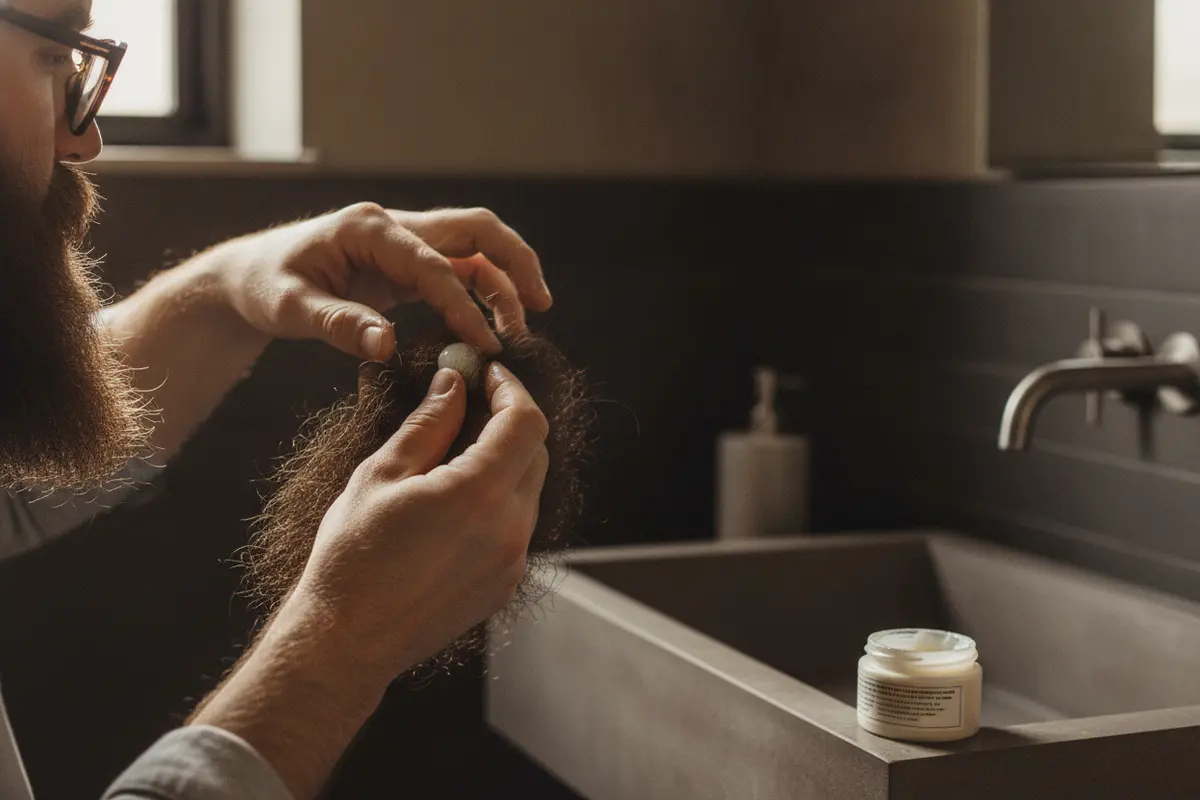
Who is beard styling balm a good fit for?
Balm can make sense if your beard feels coarse, looks untidy between trims, or needs help sitting in a consistent direction. It can also suit a man who wants one leave-in product that addresses both beard feel and the skin beneath facial hair. A short beard may need only a trace; a longer or denser beard may take more product, applied in sections.
It may not be the right first choice if you want a rigid, all-day sculpted finish, dislike leave-in products, or have a known sensitivity to an ingredient. In those cases, check the label and consider testing a small amount on a limited area before regular use. Stop using it if irritation occurs. A product cannot be called right for everyone based only on its ingredient story.
Beard length is only part of the decision. Coarse, curly, or uneven hair may need more attention to distribution than fine, short hair. Climate and routine matter too: if you wash frequently, your beard may feel different than it does after a rest day. Give a new product a few ordinary uses and evaluate softness, manageability, residue, scent, and skin comfort rather than judging it by one rushed application.
For a short beard, start with a very small dab and concentrate on the areas that feel rough or stand out. Too much product can flatten short hair and make the face feel coated. With a longer beard, divide the hair into a few sections and work the balm through each one, taking care to reach the roots without leaving a thick layer on the ends. If your beard has a defined shape, use the balm to smooth and guide it after brushing rather than trying to force a new shape with extra product.
Consider the day's conditions as well. Wind, a hat, or a long stretch outdoors can disturb any style, and balm is not a weatherproof seal. If you spend time on the course or commute in changing conditions, apply enough to keep the beard comfortable and orderly, then carry a comb if you need to reset its shape later. Keep expectations practical: grooming products can improve feel and control, but your trim and natural hair pattern still determine the overall outline.
What buying signals help you choose a balm?
Use a short checklist before you buy. It keeps the decision grounded in what you need instead of turning ingredient comparisons into a contest of broad claims.
- Purpose: Is the balm intended for beard hair, facial skin, or both?
- Control: Does the maker describe light shaping or stronger hold? Does that match how you wear your beard?
- Formula: Can you review the ingredient list and directions before purchasing?
- Finish: Do you prefer a natural-feeling beard, a more polished shape, or a firmer style?
- Scent: Do you want a noticeable scent, a subtle one, or an unscented option?
- Routine: Will the product complement your beard wash and comb, or duplicate something you already use?
- Brand and provenance: Does the brand clearly explain what it makes and where it is made, without leaning on vague claims?
DALYSMOOTH is a premium, USA-made men's grooming brand built around beef-tallow beard and skin care. If you want to compare a single balm with a coordinated wash-and-balm routine, browse the beard and skin balm collection or explore grooming bundles and Smooth Sets. A set can make sense if you want both a cleanser and a leave-in product; a single balm is a straightforward starting point if you already have a wash that works for you.
For a broader view of the brand's ingredient approach and background, visit the DALYSMOOTH story. If you are comparing a complete routine, this guide to using beard balm and wash together can help you keep each step purposeful.
How can you tell whether your balm is working?
Judge the product by a few repeatable signals. After application, does your beard feel softer without a heavy coating? Can you guide stray hairs into place with your hands or comb? Does the skin beneath the beard feel comfortable? Is the scent acceptable for your day? These are more useful checks than expecting a balm to create dramatic growth or permanently change hair texture.
If the beard feels greasy, reduce the amount and focus on spreading it evenly. If the product feels stiff or does not give the shape you want, review its hold level and consider whether a different product type is a better match. If the skin feels uncomfortable, stop and check the ingredients rather than adding more product. A sensible grooming routine is built by observing how your beard responds, not by layering on extra steps.
For many men, the practical target is modest: a clean beard, skin that feels comfortable, and hair that sits the way they prefer. A well-chosen beard styling balm can support that result with one simple leave-in step. Keep the amount restrained, give the product time to show how it wears in your routine, and choose a formula based on its actual purpose rather than the biggest promise on its label.
Find a DALYSMOOTH balm for your beard
What questions do men ask about beard styling balm?
Does beard styling balm make a beard grow faster?
No. Balm is a grooming product for conditioning and shaping. It can help beard hair look more manageable, but it should not be treated as a product that changes growth rate.
Should I use balm on a wet or dry beard?
Follow the directions on the product. Many men find a towel-dried beard easy to work with because it is not dripping wet, but the ideal timing depends on the formula and your preference.
Can I use beard balm every day?
Use it as directed and adjust frequency to your beard and skin. If daily use leaves residue or discomfort, reduce the amount or frequency and reassess the product's fit.
Is beard balm the same as beard oil?
No. Both are leave-in grooming formats, but oil is fluid while balm has a more substantial texture and may offer more shaping help. The best choice depends on the feel and control you want.
Choose a balm for the job you actually need it to do: soften and guide everyday beard hair, not deliver a promise no grooming product can guarantee. A small amount and a straightforward routine are often the best place to start.


