

What Should Men Know About Anti Itch Cream?
Beard itch is not always a sign that you need a stronger product. Dry, cracked, or irritated skin can itch beneath facial hair, while other causes call for a different response. The first move is to understand whether you are dealing with a moisture problem, a temporary irritation, or something that should be assessed by a healthcare professional.
The right anti itch cream depends on the cause and the active ingredient. Medicated products may target specific symptoms, while a well-chosen grooming balm can support moisture, beard softness, and skin comfort when dryness is the issue. DALYSMOOTH products are grooming options, not anti-itch medication.
For men with beards, that distinction matters. Hair can hide the skin underneath, and adding product without cleansing or drying carefully can leave the real problem unresolved. Start by separating symptom relief from everyday conditioning, then build a routine that fits the skin beneath your beard.
Shop First Tee Tallow Face + Beard Balm
What Does Anti Itch Cream Actually Do?
Itch is a symptom, not a diagnosis. An anti itch cream may calm the sensation, reduce irritation, add moisture, or address a specific type of skin inflammation, depending on its active ingredient. That distinction matters because the same urge to scratch can come from several different situations.
Dry, cracked, or irritated skin is a common reason for itching. Very dry skin can flake, itch, crack, and even bleed, especially when the skin barrier is under strain. The NHS overview of itchy skin notes that dryness and irritation are among the possible explanations. For a man with a beard, facial hair can make the problem harder to see and can trap cleanser, sweat, or loose skin close to the face.
Other causes are possible, including bites and different skin conditions. Itching can also appear without an obvious rash. The American Academy of Dermatology explains that intensely itchy skin may look normal, while persistent itch can sometimes point to an issue that needs professional assessment. That is why choosing a product based only on the label or the intensity of the sensation can miss the bigger picture.
Why does the cause matter?
A moisturizer may be a sensible grooming step when the underlying issue is everyday dryness. It can support more comfortable-looking skin and reduce the cycle of dryness followed by scratching. But a moisturizing balm is not the same thing as a medicated cream, and neither should be treated as a universal answer. Scratching can further irritate already uncomfortable skin, so the useful first move is to reduce obvious irritants and pay attention to how the skin changes.
Look for patterns. Does the itch follow washing, shaving, sweating, or exposure to a new product? Is there flaking, redness, swelling, a rash, or a sore area? Is it limited to the skin beneath the beard, or is it spreading elsewhere? These observations do not provide a diagnosis. But they help establish whether simple moisture and gentler grooming are appropriate starting points or whether a clinician should take a closer look.
Once you separate symptom relief from routine moisture, the next question is ingredient function. The difference between a medicated active, a cooling ingredient, and a conditioning moisturizer determines what an anti itch cream is designed to do.
Which Anti Itch Cream Ingredients Matter Most?
The useful distinction is not simply which anti itch cream sounds strongest. It is what role the ingredient is meant to play, whether the skin problem fits that role, and what the label says about safe use. Itch can come from dryness, irritation, inflammation, or a condition that needs professional assessment, so ingredient education should inform a decision, not replace diagnosis or prescribing.
Use the comparison below as a practical map. These categories are not interchangeable, and a grooming moisturizer is not the same thing as a medicated product.
| Ingredient or category | Primary role | Where it fits | Key caution |
|---|---|---|---|
| Hydrocortisone | A topical corticosteroid used to reduce swelling, redness, and itching associated with various skin conditions. | Medicated care for an appropriate itchy or inflamed skin concern, following the product label or a clinician's direction. | Apply only as directed. Keep it out of the eyes and mouth, do not swallow it, and do not cover the area unless a doctor recommends it. If an over-the-counter product has not improved the condition within seven days, MedlinePlus advises stopping and contacting a doctor. |
| Calamine | A topical option used to relieve itching, pain, and discomfort from some minor skin irritations. | Situations such as minor irritation from poison ivy, poison oak, or poison sumac, where a cooling topical approach may be appropriate. | It is not a universal answer for unexplained or persistent itch. Follow the product directions, and seek medical advice when symptoms are severe, widespread, recurrent, or not improving. |
| Pramoxine | A topical pain reliever found in some over-the-counter creams and gels for itch relief. | Short-term symptom relief may be an option when the label fits the concern and the product is used as directed. | Pramoxine addresses the sensation, not necessarily the cause. Check the label and stop relying on self-care if the problem persists or the skin changes. |
| Plain moisturizer | Supports dry skin by adding moisture, especially when applied while skin is still damp. | Everyday dryness, tightness, or irritation where the priority is routine skin support rather than medication. A fragrance-free formula is the safer starting point for sensitive skin. | Moisturizer does not treat every cause of itching. Fragrance can irritate skin, and persistent symptoms deserve assessment rather than repeated product changes. |
For beard care, the boundary matters. A balm or moisturizer can support the skin and beard when dryness is the issue. But it should not be presented as anti-itch medication or as treatment for a medical condition. When the cause is unclear, or when redness, swelling, rash, bumps, sores, or worsening symptoms appear, a qualified clinician can assess the skin and determine the appropriate next step. Sources: MedlinePlus on topical hydrocortisone, Mayo Clinic on calamine, and American Academy of Dermatology itch-care guidance.
How Can Men Handle Itch Under a Beard?
Beard hair can make it harder to see what is happening underneath. Dry skin may flake, itch, crack, or even bleed, while irritation can build when cleanser, sweat, and product residue stay close to the skin. Itch can also occur without an obvious rash, so do not assume every uncomfortable beard needs the same product.
Start with the basics. Use warm, not hot, water and keep the wash focused on removing dirt and excess oil rather than creating a heavy lather. A gentle cleanser is usually the better choice for dry or easily irritated skin. Work it through the beard so the skin underneath receives attention, but avoid aggressive scrubbing with fingernails or a rough brush.
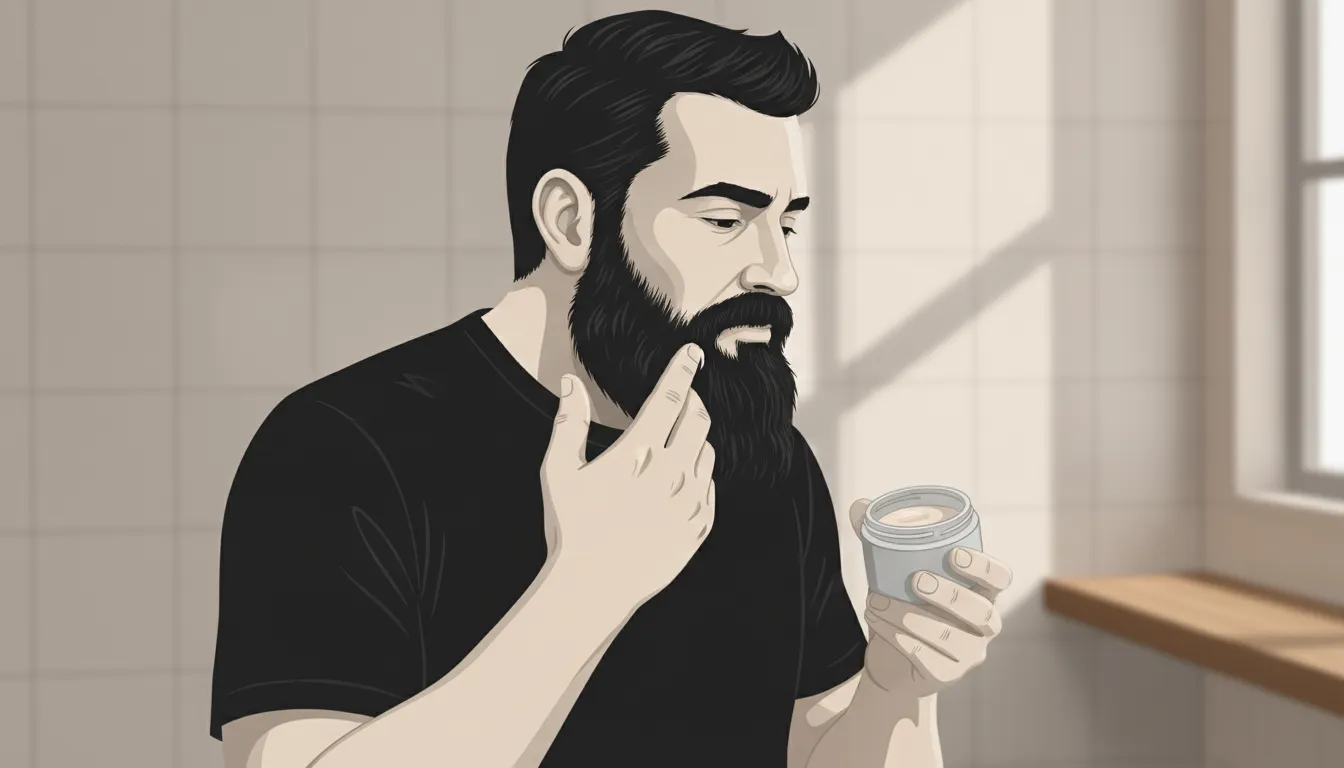
Dry carefully after washing. Pat the beard and face with a clean towel instead of rubbing vigorously. Rubbing can further irritate extremely dry skin, and rough handling can leave the hair feeling coarse. Once the beard is no longer dripping but the skin is still slightly damp, apply a simple moisturizer or grooming balm in a controlled amount. Use your fingertips to part the beard and reach the skin, then smooth the remainder through the hair.
This is where beard-specific conditioning can make practical sense. A balm is a grooming and moisturizing product, not an anti itch cream or a substitute for medical care. DALYSMOOTH positions its beef-tallow balms to nourish skin, soften beard hair, provide lasting moisture, and offer natural control. Beef tallow is described by the brand as naturally rich in vitamins A, D, E, and K. But those properties do not make a balm a treatment for eczema, infection, rash, or another medical cause of itching.
For a deeper application walkthrough, see how to moisturize skin under beard. If you want a lightweight option for both facial hair and skin, First Tee Tallow Face + Beard Balm is described as fast-absorbing, non-greasy, and soft-hold. Stop self-care and seek professional advice if the itch is severe, widespread, keeps returning, or comes with redness, swelling, bumps, sores, or other changing skin symptoms.
When Should You Stop Self-Care and Get Medical Advice?
Beard itch is not automatically a grooming problem. Dryness and irritation may settle with a simpler routine, but itch is a symptom, not a diagnosis. If it is severe, widespread, recurrent, unexplained, or paired with visible skin changes. Stop treating the situation as something to solve by trial and error with another anti itch cream.
The NHS advises seeking medical advice when itching is severe, all over the body, keeps coming back, or does not improve with self-care. Those boundaries matter under a beard, where hair can conceal redness, swelling, bumps, sores, or a spreading rash. You do not need to identify the cause yourself before asking for help.
Which changes should prompt an appointment?
Arrange professional assessment when the itch is getting worse, keeps returning, or does not respond to sensible basic care. Pay close attention to new or changing areas, swelling, a rash, bumps, sores, cracking, or unexplained symptoms beyond the beard area. The American Academy of Dermatology notes that a dermatologist can assess an underlying condition when at-home measures do not bring relief or when changes such as redness, swelling, rash, bumps, or sores appear. See AAD guidance on when itchy skin needs evaluation.
Persistent itch also deserves more than a product swap. A clinician typically starts by examining the skin and asking about your medical history, which helps separate ordinary dryness from other possible causes. Mayo Clinic describes that diagnostic starting point here: how itchy skin is evaluated.
What if you are already using a medicated cream?
Follow the product label rather than extending treatment because the first few applications did not solve the problem. For over-the-counter hydrocortisone, MedlinePlus advises stopping and contacting a doctor if the condition has not improved within seven days: hydrocortisone safety and use information. A pharmacist or clinician can help determine whether the product is appropriate for the location, duration, and appearance of the problem.
This article is grooming education, not medical advice. DALYSMOOTH products can be discussed as moisturizing and beard-conditioning options, but they are not anti-itch medication and should not replace evaluation or prescribed care. When symptoms are severe, changing, swollen, rashy, recurrent, unexplained, or not improving, getting an answer from a qualified healthcare professional is the practical move.
What Simple Routine Helps Reduce Everyday Dryness?
When dryness is the main issue, consistency usually matters more than adding another product. A simple routine can help protect the skin under your beard from extra friction and avoidable irritation. It is general grooming guidance, not a treatment for a disease or a substitute for medical advice when itching is severe, widespread, recurrent, or changing.
- Use cool or lukewarm water. Keep showers and face washes brief, around five to ten minutes, and avoid extreme temperature changes. Hot water can leave already-dry skin feeling tighter, while cooler or lukewarm water is a more practical choice for everyday comfort. The American Academy of Dermatology recommends limiting baths and showers and using warm water for dry skin. While NHS guidance specifically advises cool or lukewarm bathing for itchy skin. See the AAD dry-skin guidance and NHS itchy-skin guidance.
- Clean without overdoing it. Use a gentle cleanser to remove sweat, dirt, and excess oil. Apply enough to clean the area, but do not chase a thick lather. Work the cleanser through the beard so it reaches the skin beneath it, then rinse thoroughly. Avoid perfumed soaps and other fragranced products if they seem to trigger irritation.
- Pat the beard and skin dry. Do not scrub your face or drag a towel aggressively through the hair. Gently pat with a clean, dry towel and leave the skin slightly damp. Rubbing can irritate extremely dry skin, especially when the area is already flaky or uncomfortable.
- Moisturize while the skin is damp. Apply a fragrance-free moisturizer or emollient soon after washing, while the skin still holds some moisture. Work it through the beard and onto the skin underneath rather than coating only the hair. For a beard-specific walkthrough, read how to moisturize skin under your beard. Reapply when the skin feels dry instead of waiting until discomfort builds.
- Remove the common irritants. Check soaps, detergents, deodorants, and moisturizers for added fragrance. If a product consistently leaves the skin tight, burning, or itchy, stop using it and simplify the routine. Loose, breathable clothing can also reduce friction elsewhere on the body.
- Do not scratch the itch. Scratching can further irritate the skin. Pat or tap the area instead, or use a cool, damp washcloth for five to ten minutes when needed. Pay attention to patterns, such as a new cleanser, sweat, weather, or a grooming product. If the problem does not improve with self-care, keeps returning, or comes with redness, swelling, rash. Bumps, or sores, get professional advice rather than reaching for an anti itch cream at random.
How Does DALYSMOOTH Fit Into a Beard and Skin Routine?
DALYSMOOTH belongs on the grooming side of the decision, not in the same category as medicated anti itch cream. If your concern is ordinary dryness, rough beard texture, or skin that feels tight after washing, a conditioning balm can support a more comfortable routine. It does not diagnose or treat a medical cause of itching, and it should not replace advice from a qualified clinician when symptoms persist or change.
The brand makes beef tallow the foundation of its core products. DALYSMOOTH describes tallow as naturally rich in vitamins A, D, E, and K, and positions its balms around nourishing skin, softening beard hair, lasting moisture, and natural control. That makes the ingredient relevant to the practical gap between a clean beard and one that feels dry, coarse, or difficult to manage. It is a grooming position, not a treatment claim.
For a lighter everyday option, First Tee Tallow Face + Beard Balm is described as lightweight and fast-absorbing, with a non-greasy, soft-hold finish. It is designed for multi-use beard and skin conditioning, so you can work a small amount through facial hair and apply what remains to the skin underneath. The formula includes beef tallow alongside castor oil, sunflower oil, shea butter, beeswax, jojoba oil, rosehip oil, cacay seed oil, and tocopherol.
Use it after gentle cleansing and careful drying, starting with a small amount rather than coating the beard heavily. The goal is conditioned hair and supported moisture, not a greasy layer or a promise of instant symptom relief. If your skin is visibly inflamed, swollen, broken, or repeatedly itchy, step outside the grooming aisle and get medical guidance.
Shop the DALYSMOOTH beard and skin balm collection
Frequently Asked Questions
What is the best anti-itch cream?
There is no single best option for every cause of itching. For dry skin, start with a fragrance-free moisturizer applied while the skin is damp. If irritation continues, an ingredient such as calamine or pramoxine may be relevant, while hydrocortisone is a medication that should be used exactly as directed on its label. The American Academy of Dermatology explains several itch-relief options.
What cream stops itching fast?
Fast relief depends on what is driving the itch. A cool, damp washcloth applied for five to ten minutes may calm the sensation temporarily, and moisturizer can help when dryness is the issue. Avoid scratching, since it can further irritate the skin. If the itch is severe or keeps returning, focus on identifying the cause rather than repeatedly switching creams.
What is the strongest anti-itching cream?
Strength is not the right way to choose a product. Hydrocortisone is a topical corticosteroid used for itching, redness, and swelling from various skin conditions, but it is not appropriate for every situation. Follow the product directions, keep it away from the eyes and mouth, and ask a doctor or pharmacist if you are unsure whether it fits your symptoms.
Can I use anti-itch cream every day?
Do not assume that daily use is appropriate for a medicated cream. Read the label and follow its time limits. For over-the-counter hydrocortisone, MedlinePlus advises stopping and contacting a doctor if the condition has not improved within seven days. A simple fragrance-free moisturizer may be used more routinely for dry skin, including beneath a beard.
When should I seek medical care for itching?
Get professional advice when itching is severe, widespread, unexplained, recurrent, or accompanied by redness, swelling, a rash, bumps, or sores. If self-care does not help or the skin is changing, a dermatologist can assess the underlying cause. Do not use a grooming balm as a substitute for medical evaluation or prescribed treatment.
Ready to Keep Your Beard and Skin Routine Simple?
Once you understand the difference between medicated relief and everyday grooming care, the next step is choosing products that fit your routine without adding unnecessary complexity. DALYSMOOTH uses nutrient-rich beef tallow as a straightforward conditioning ingredient for beard and skin care. Shop the DALYSMOOTH beard and skin balm collection to get started with a practical care path.


